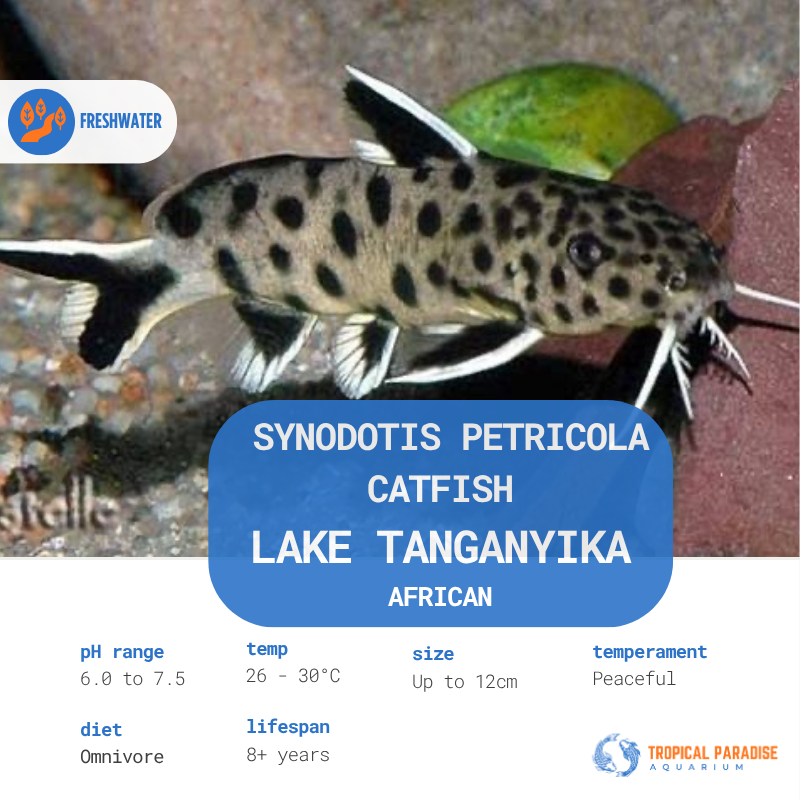
Synodontis petricola, commonly known as the pygmy leopard catfish, dwarf cuckoo catfish, or dwarf upside-down catfish, is a small, active, and peaceful species from the rocky shores of Lake Tanganyika in Africa. It is popular for its spotted pattern, occasional upside-down swimming, and engaging behavior.Longer tanks are better than tall ones due to their swimming style and they are active swimmers. Keep them in groups of at least 4–6 (more is better) for natural shoaling behavior—they chase each other playfully and are more active in company.TANK: Fine sand is best to protect their sensitive barbels (whiskers) while foraging. Provide plenty of hiding spots with rocks, caves, slate, driftwood, or shells (especially for a Tanganyikan biotope). Anubias or other hardy plants attached to rocks/wood work well; they appreciate some open swimming space too.FILTRATION: Good filtration with moderate water flow and high oxygenation mimics their lake habitat. They are sensitive to high nitrates, so perform frequent partial water changes (20–30% weekly or more).Feed small amounts multiple times a day or once/twice daily. They graze and forage at the bottom but may swim up to take food.TANK MATE: African Tanganyikan cichlids (e.g., Neolamprologus species), other peaceful mid-sized fish, rainbowfish, or appropriately sized livebearers. They do well in a Tanganyikan biotope setup.NTK: They may rest motionless or hide during the day but become more active in the evening or in groups.P.H: 6.0-7.5DIET: OmnivoreTEMPERAMENT: 24 – 28cSIZE: – 12cmLIFESPAN: 8 yearsTEMPERAMENT: PeacefulARCATUS CORYL600 PLECOLEOPARD CACTUS PLECOL600 Pleco (also known as Leopard Cactus Pleco, or sometimes Orange Seam Leopard Cactus Pleco) Its scientific name is Pseudacanthicus leopardus. It comes from fast-flowing rivers in South America. Bold leopard-like black-and-white spotted/reticulated pattern on the body, lots of prominent spines and striking bright orange or reddish seams/highlights on the dorsal fin and tail. Ideal for large, mature aquariums.TANK: Plenty of hiding spots (caves, PVC pipes, rockwork, driftwood) to reduce stress and territorial behavior. They don’t require wood for eating (unlike Panaque species) but appreciate structure. Moderate to high lighting isn’t an issue if hides are provided.TANK MATE: Generally peaceful with community fish that aren’t small enough to eat, but can be territorial/aggressive toward other plecos or similar-sized bottom dwellers (especially males). Provide ample space and hides if keeping multiples. Not ideal for heavily planted or nano tanks.MAINTENANCE: They appreciate warm, oxygen-rich conditions. They thrive in well-filtered, clean water with low nitrates (<30 ppm). Regular large water changes help. High oxygenation and strong water flow are important.NTK: In places like Australia (relevant to your Sydney location), imports can be restricted or banned, making them rarer and more expensive locally.