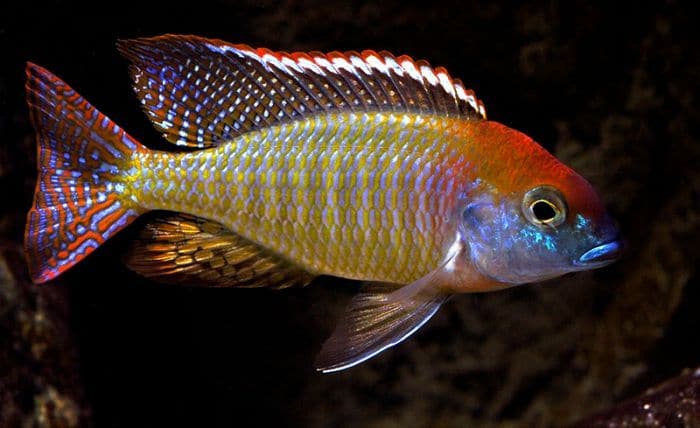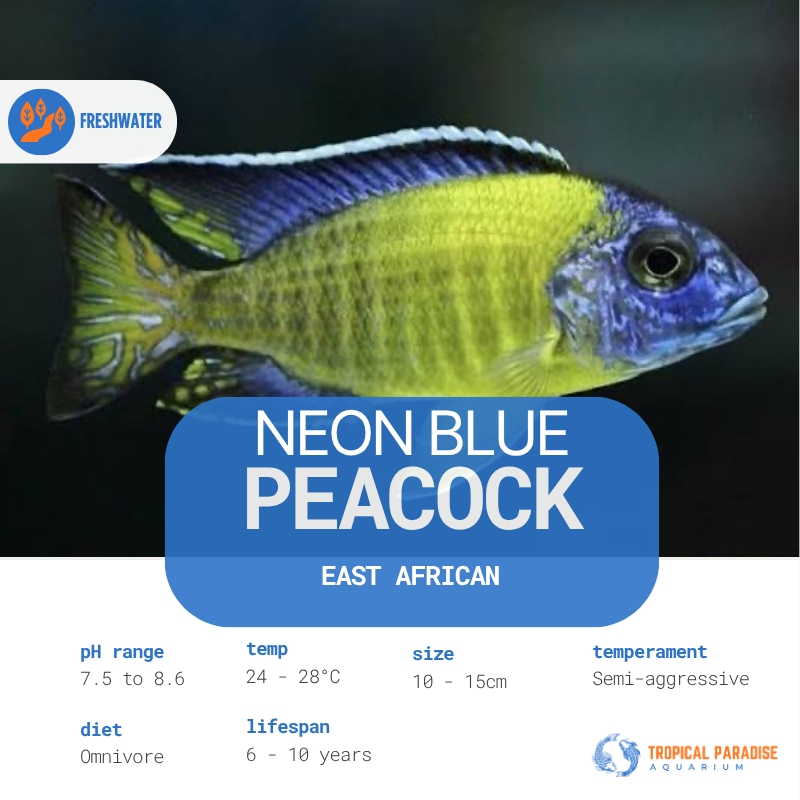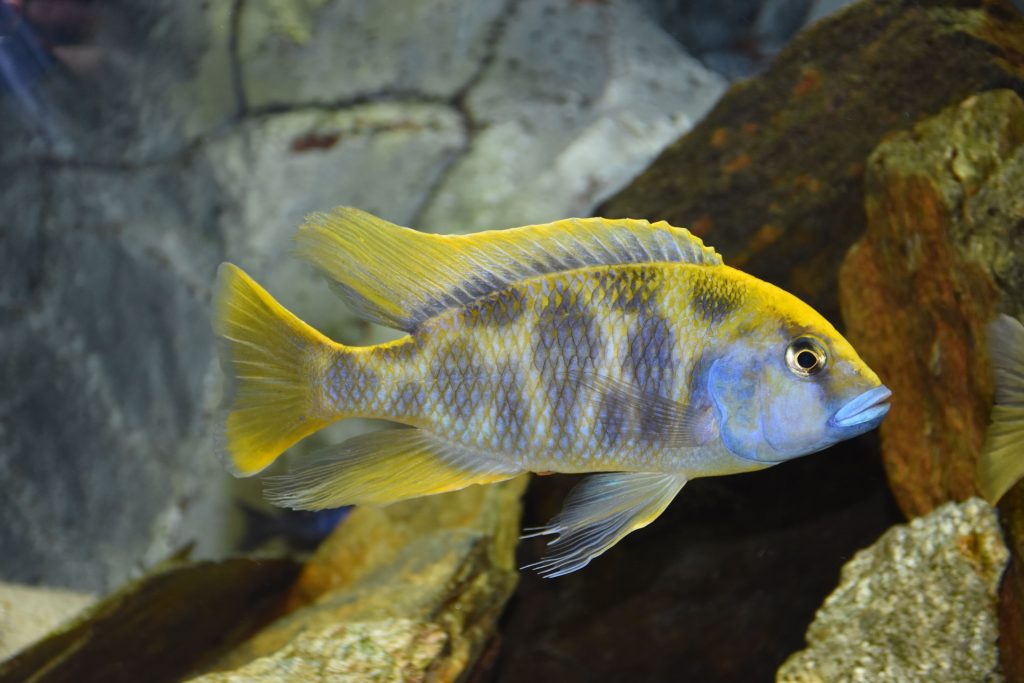
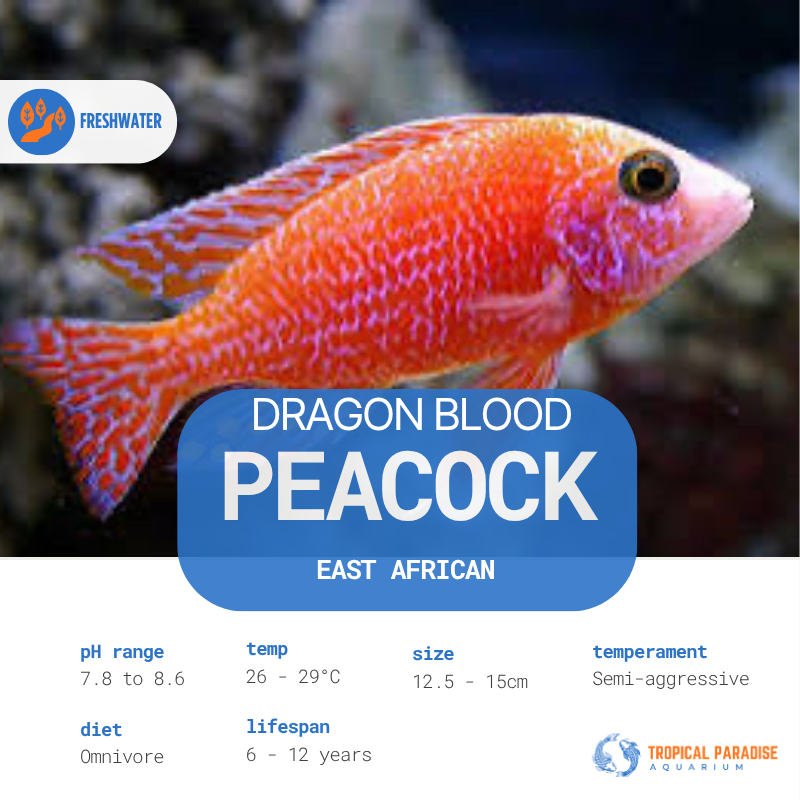
Dragon Blood Peacock (often a hybrid or variant of Aulonocara species, such as Aulonocara baenschi) is a colourful, popular African cichlid known for its vibrant red/orange and blue hues, especially in males. These are peaceful to moderately aggressive compared to other cichlids, but they can be territorial. Originate from Lake Malawi in East Africa (rocky shores and open sandy areas). They inhabit clear, alkaline waters with rocky outcrops for territories and caves, as well as sandy bottoms where they sift for food. Overstocking slightly (with proper filtration/changes) can reduce aggression in African cichlid tanks. Always cycle the tank fully before adding fish. These are relatively hardy but demand consistent water quality.TANK SET UP: Minimum tank size is better 300 or a 4ft long tank for one male females or a small group. Larger tanks reduce aggression. Decorated with stacked rocks creating caves and hiding spots, with some open swimming space. Avoid heavy planting as they may dig. Sand or fine gravel (they sift through it).TANK MATE: Best with other Lake Malawi peacocks or milder haps. Avoid mixing with aggressive Mbuna. Keep 1 male with 3–5 females to reduce harassment. Or all male, intentionally overstock the aquarium (adding more fish than usual), break up sightlines with rocks and driftwood, and introduce new fish simultaneously.AGGRESSION CONTROL: If you notice males chasing each other aggressively, try lowering the light intensity. Dim, ambient room lighting or blue-only moonlights allow for casual viewing without agitating the fish.FILTRATION: Strong filtration is essential. Aim for 8–10 tank turnovers per hour. Canister filters, HOBs, or sump systems work well. Add powerheads or wave makers for water movement (they like oxygenated water).MAINTENANCE: Perform 20–50% weekly, which is common (or 40–75% in heavily stocked tanks)—ammonia/Nitrite 0 ppm. Nitrate should be kept below 20–30 ppm. Use Rift Lake buffers or additives if your tap water is soft/acidic.Clean filters monthly (rinse in tank water, not tap).LIGHTING: You should use full-spectrum LED lights (good mix of white, blue, and red diodes) between 6500K and 10000K for (10-12) hours a day.FEEDING: High-quality cichlid pellets/flakes, supplemented with spirulina, brine shrimp, bloodworms, or daphnia. Feed 2–3 times daily in small amounts.